
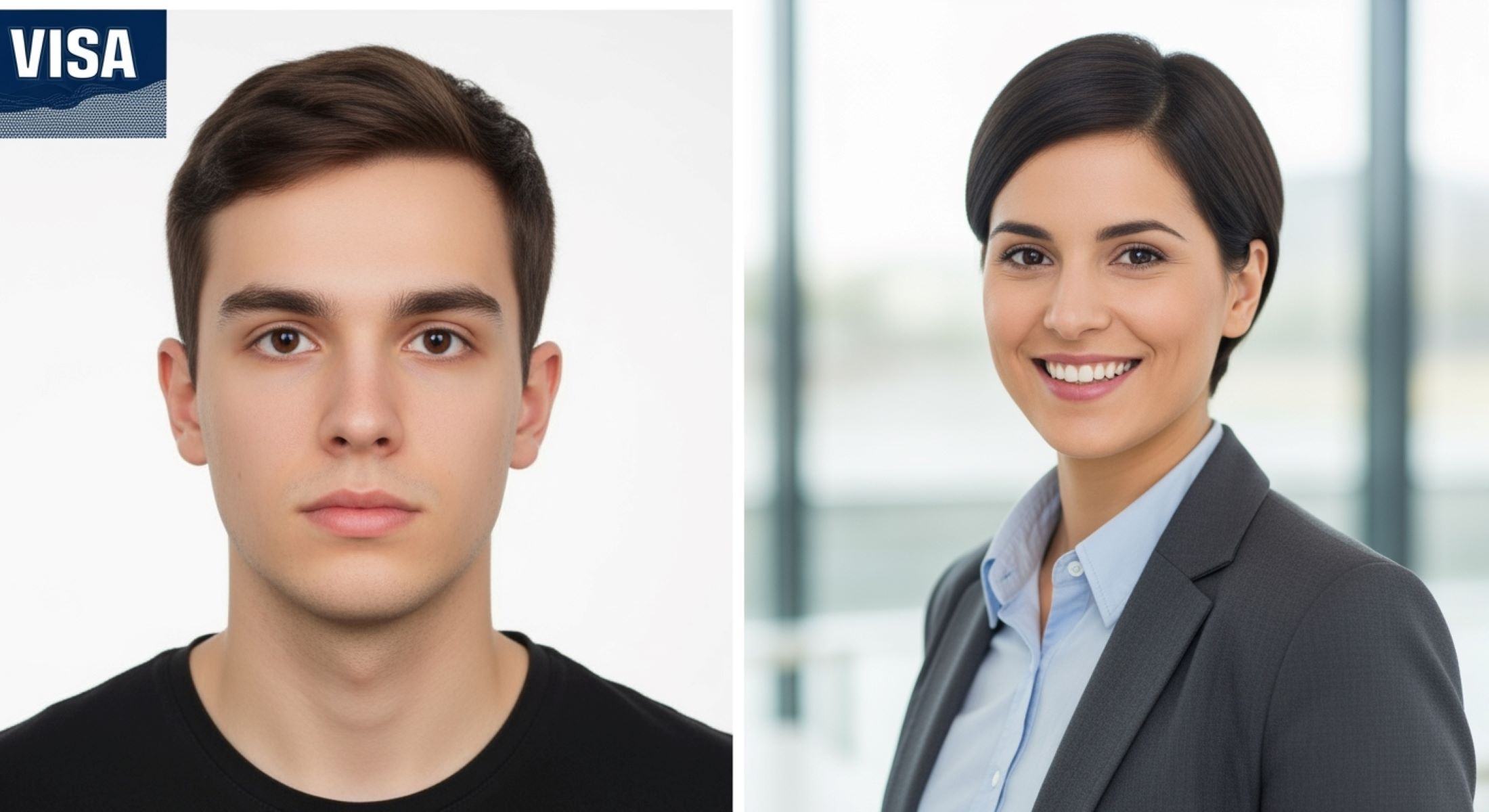
When it comes to official documents, photos might seem like just a small detail, but they can make or break your application. You might be surprised to learn that a visa photo and a work-related document photo are not interchangeable. The requirements for each are distinct, and getting it wrong could lead to delays—or even rejections. Let’s dive deep into the differences, rules, and best practices, so you never face that frustrating moment of “Oops, wrong photo!”
Technical Specifications
Technical specifications are one of the most important factors that distinguish visa photos from work-related document photos. Visa photos are subject to strict technical requirements, often needing a high resolution of around 300 dpi to ensure clarity and sharpness. This high resolution is necessary because immigration authorities frequently use digital systems and biometric recognition software to verify applicants’ identities. Any blurriness, pixelation, or shadowing can result in the photo being rejected, potentially delaying the visa application process.
File format is another critical aspect of visa photos. Most consulates and embassies require photos to be submitted as JPEG or PNG files, following specific size, dimension, and compression rules. These standards ensure compatibility with automated processing systems and databases. When photos are printed, additional specifications such as paper quality and finish may also apply. The overall aim is to maintain uniformity and reliability, so that each visa applicant’s photo can be accurately stored and retrieved by government authorities.
Work-related photos, in comparison, are generally more flexible in technical requirements. Resolution may vary depending on the company’s internal system, and photos are often stored digitally for ID cards or employee databases. File formats are less restricted and can include JPEG, PNG, or other formats compatible with the company’s HR and security systems. While clarity is still important to ensure that employees can be easily identified, minor deviations in quality are usually tolerated because these photos are not subject to the rigorous scrutiny applied to visa photos.
Recentness and overall quality are also treated differently between the two types of photos. Visa photos are typically required to have been taken within the last six months, reflecting the applicant’s current appearance and ensuring accurate identity verification. Work-related photos can be older, updated periodically by HR as needed, or revised during role changes or annual ID renewals. These distinctions underscore the higher standards and stricter regulations applied to visa photos, compared to the practical flexibility allowed for work-related identification purposes.
Understanding the Basics: Why Photos Matter
| Feature | Purpose | Primary Use | Regulatory Authority | Key Considerations |
| Visa Photo | Identity verification for travel | Border control, immigration checks | Government, embassies, consulates | Must meet strict international standards; size, background, and expression are regulated |
| Work-Related Photo | Identity verification for workplace | Employee IDs, permits, professional licenses | Company, HR departments | Flexible standards; often determined by internal policy; background, attire, and expression may vary |
| Standardization | High | Moderate | Government vs. organization | Visa photos require universal compliance; work photos prioritize practicality over strict compliance |
| Update Frequency | Frequent | Periodic | Varies by regulation and company policy | Visa photos often updated within 3–6 months; work photos updated every 2–3 years or upon role changes |
| Purpose Beyond ID | Security and fraud prevention | Access control, HR records | Border/security authorities vs. company administration | Visa photos help prevent identity fraud internationally; work photos focus on internal verification and convenience |
Key Differences in Purpose
- Visa photos are primarily used for immigration control, acting as a critical checkpoint in international travel. They allow border authorities to compare the applicant’s photo with their physical appearance, ensuring that the person traveling matches the official records. This verification process helps prevent identity fraud and is a key part of global security measures.
- One of the main goals of a visa photo is to match your identity with official records, making sure your passport, visa application, and any other related documents are consistent. This strict alignment helps streamline border procedures and ensures that the traveler is correctly identified.
- Visa photos are designed to prevent fraud or impersonation, making it extremely difficult for someone else to use your identity to cross borders or access restricted areas. The emphasis is on maintaining security and trust in international travel systems.
- Another important purpose of visa photos is to ensure standardized recognition across countries. Each country may have slightly different specifications, but overall, these photos follow widely recognized standards for size, background, and facial expression to facilitate accurate identification by immigration officials worldwide.
- Work-related document photos, in contrast, serve a more localized and functional purpose within a specific organization or workplace. They are not scrutinized by international authorities but are essential for operational efficiency within the company.
- A primary function of work-related photos is access control within buildings or restricted areas, allowing security systems and staff to verify whether an individual is authorized to enter certain spaces.
- These photos also play a key role in employee verification, helping HR departments, team managers, and colleagues quickly identify staff members. This is particularly useful in large organizations where recognizing everyone by face alone may be difficult.
- Work-related document photos are often used for display on company systems, ID badges, or professional permits, serving as a quick reference for identification during day-to-day operations. This ensures smooth workflow and maintains organizational security.
- Unlike visa photos, work-related photos focus more on practicality than on strict standardization. While clarity and visibility are important, minor variations in size, background, or facial expression are generally acceptable as long as the photo fulfills its identification purpose.
- Overall, visa photos are security-focused and globally standardized, while work-related photos are utility-focused and internally standardized, reflecting the different contexts and requirements of international travel versus workplace identification.
Size and Dimension Differences
One of the first and most noticeable differences between visa photos and work-related document photos is their size and dimensions. Visa photos are generally standardized to ensure consistency across international borders. For example, in the United States, the typical visa photo size is 2×2 inches (51×51 mm). Other countries may have slightly different requirements, such as 35×45 mm or 50×50 mm, but the underlying principle is the same: the photo must be uniform and meet strict specifications to be accepted by immigration authorities. This rigid standardization ensures that the photo can be easily scanned, stored, and compared across global systems.
Work-related document photos, in contrast, are often more flexible in size. Companies typically determine the dimensions based on their internal ID card designs, employee portals, or digital databases. Common sizes range from 1×1 inch to 1.5×2 inches, but organizations may customize these measurements to fit their unique templates or badge layouts. Because these photos are used primarily for internal identification rather than international security, there is more leeway in adjusting size and proportions to suit practical needs.
Another notable difference is how these size requirements affect the overall presentation of the photo. Visa photos need to accommodate biometric systems and automated recognition technology, so precision in dimension and aspect ratio is crucial. Even slight deviations can result in photo rejection, delaying visa processing or requiring a retake. Work-related photos, however, are generally displayed on ID cards, office directories, or HR systems, meaning that minor inconsistencies in size or cropping rarely cause operational issues.
Finally, the flexibility versus rigidity of size standards reflects the different purposes of these photos. Visa photos must adhere to internationally recognized rules to ensure uniformity and compatibility across border systems. Work-related photos prioritize practicality and convenience, allowing companies to tailor the dimensions to their internal needs. Understanding these distinctions helps applicants avoid unnecessary errors, whether they are preparing for international travel or creating a professional employee ID.
Background Rules
| Feature | Visa Photo | Work-Related Photo | Purpose of Background | Notes/Considerations |
| Standard | Plain, light-colored | Flexible; can be white, light, branded, or textured | To clearly show the face and avoid distractions | Visa photos require strict uniformity; work photos allow slight creativity |
| Color | White or off-white | White, light, gradient, or company-branded | Enhance visibility and recognition | Consistency is critical for visas; for work IDs, branding or office style may be used |
| Patterns | Not allowed | Occasionally allowed for internal branding | Avoid visual distractions | Visa photos must remain neutral; work photos can include subtle logos or patterns |
| Shadows | No shadows | Minor shadows may be acceptable | Ensure facial features are clearly visible | Shadow-free images are critical for automated visa checks; work photos tolerate slight lighting variations |
| Consistency | High across all applicants | Varies by company policy | Standardization for identification purposes | Visa photos must meet international standards; work photos follow internal company templates |
Facial Expression and Pose
- Visa photos require a neutral expression, with no smiling, to ensure that facial features are accurately captured for identification purposes. A neutral expression helps immigration officers and automated systems compare the applicant’s face to the official records without any distortion caused by facial movements.
- Eyes must be fully open, and the mouth must remain closed, which allows for precise recognition of critical facial landmarks. Any deviation, such as squinting, frowning, or a partially open mouth, can interfere with biometric verification and potentially lead to rejection of the visa application.
- The head must be positioned directly facing the camera, with the full face visible and centered within the frame. Even minor tilts or angles may cause issues with automated recognition software, making strict adherence to pose requirements essential.
- Facial features must be clearly visible, with no shadows or obstructions, to meet immigration standards. This ensures that the photo can be reliably used for identity verification in any official context, including airport security and consulate checks.
- Work-related photos, in contrast, allow for more personality and flexibility in expression and pose. Slight smiles are often acceptable, giving the photo a friendlier and more approachable appearance suitable for workplace environments.
- Minor tilts of the head or subtle adjustments in posture are generally tolerated in work ID photos, as long as the face remains identifiable. This flexibility helps employees appear natural and professional rather than stiff or overly formal.
- Glasses, headwear, or other accessories may be allowed in work photos if they are necessary for professional, cultural, or religious reasons. This contrasts with visa photos, where such items are heavily restricted to ensure clear visibility of facial features.
- Overall, visa photos are designed to serve as a serious, official mugshot, prioritizing strict compliance with international identification standards, while work ID photos can reflect a bit of human personality, making them more practical and adaptable for daily professional use.
- Understanding these distinctions is crucial to avoid unnecessary errors, whether submitting a visa application or creating a workplace ID, as the facial expression and pose requirements directly affect acceptance and usability of the photo.